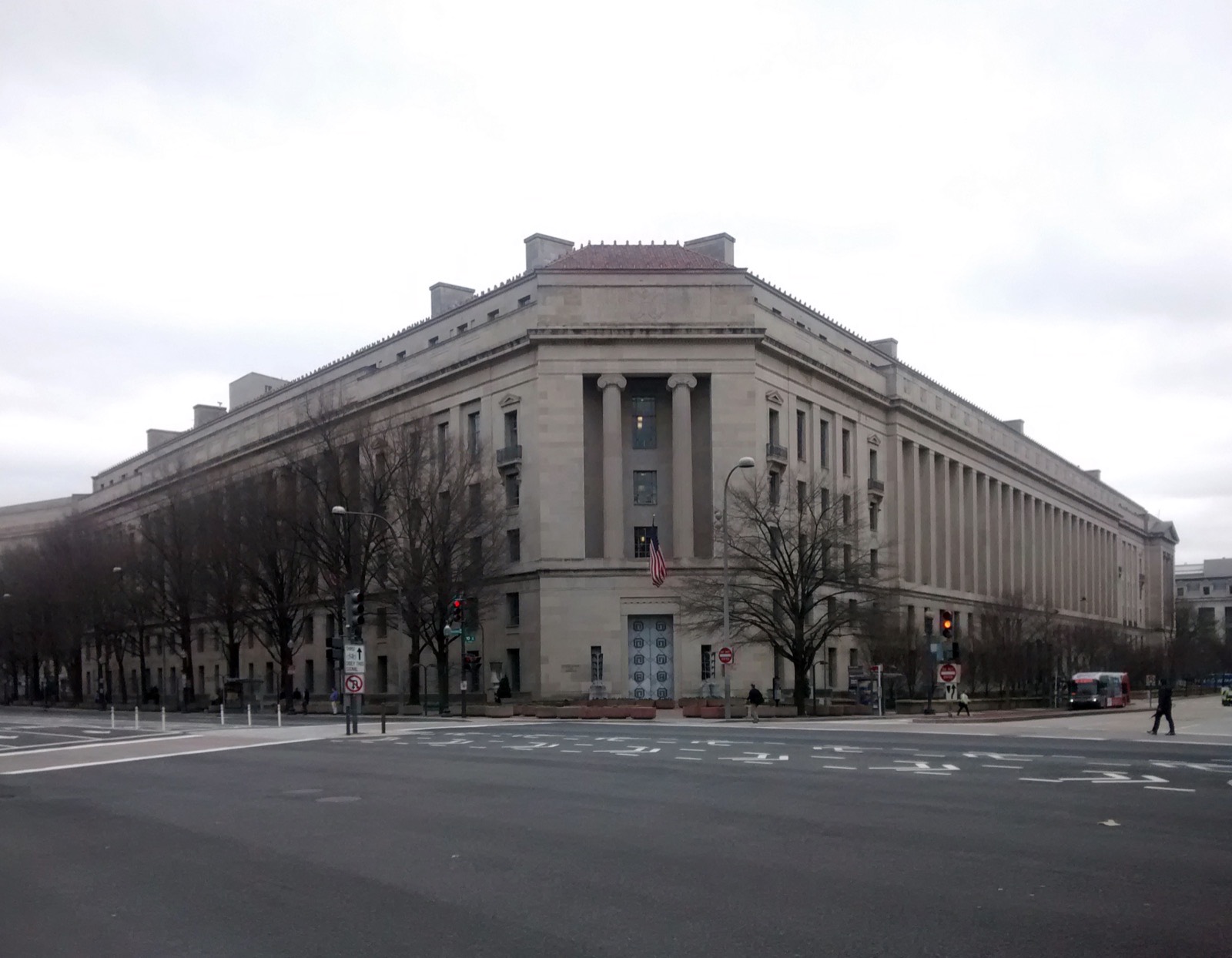
The federal government has published a four-page memo about a 1966 Mississippi murder that, by its own conclusion, almost certainly never took place. The same memo contains the government's plainest surviving account of a murder that did.
Both sit in one document, and the document is free.
Paramount's official page for By Any Means opens the synopsis with four words that carry a lot of weight: "Based on a true story." The film is listed there as "In Theatres Sep 4th, 2026", and the film's own site gives the same date. The synopsis describes a young Black FBI agent, played by Yahya Abdul-Mateen II, sent into 1960s Mississippi to investigate a wave of killings targeting civil rights leaders, forced to work alongside the mafia hitman Greg Scarpa, played by Mark Wahlberg.
Reelio has not seen the film. What follows is not a review of it. It is what the federal record actually contains about the killings the film is drawing on, and what that record openly admits it cannot establish.
The document
Notice to Close File No. 144-41-3578, dated 03/24/2010 and signed by Civil Rights Division attorney Cristina Gamondi, is addressed to the Chief of the Criminal Section. The subject line names an unknown subject in Natchez, Mississippi, and a victim: Vincent Dahmon.
The case began with a 1966 article headlined "The cost is high," written by Lincoln Lynch, then Associate National Director of the Congress of Racial Equality. The article, apparently written for CORE members, said that Vincent Dahmon, aged 65, of Natchez, had been shot by Klansmen during the Meredith March, the 1966 walk from Memphis to Jackson on which James Meredith was shot and wounded.
In the autumn of 2008 the FBI opened a review of the death under the Emmett Till Unsolved Civil Rights Crime Act of 2007, which directs the Justice Department to investigate civil rights killings that occurred no later than 31 December 1969.
What the FBI checked
This is the part worth keeping. The memo lists the investigative steps one by one, and it is one of the clearest published examples of what a federal cold-case search actually consists of.
| Record or source checked | Result |
|---|---|
| Mississippi Bureau of Vital Records | No death certificate for Vincent Dahmon |
| Adams County Chancery and Circuit Court offices | No relevant information |
| Natchez Police Department | Records searched in person by an FBI case agent, nothing found |
| Adams County Sheriff, Coroner and Voter Registration offices | No relevant records |
| Canton Police Department, Madison County District Attorney | No relevant records |
| Mississippi Bureau of Investigation, Attorney General's office | No relevant records |
| Mississippi Crime Laboratory | Searched from mid-1966 (its founding) to January 1968, nothing on Dahmon |
| Natchez Democrat archive | Office manager said a fire had destroyed all records for the period |
| Southern Poverty Law Center records | Nothing relevant to the alleged death |
| NAACP, by letter, and a public press release in local media | No information returned |
| Natchez funeral homes | Two found, one closed and one reportedly not integrated at the time; a third could not be located |
The FBI also interviewed people who would have known. Meredith himself said the story was an untrue rumour, and the memo records that he said it adamantly. Charles Evers, the former NAACP state field director, recognised the name and had nothing else. Earnest McBride of the Jackson Advocate pointed out that the 1966 march did not pass through Natchez at all. Mississippi Representative Jim Evans, Mamie Mozee, the Reverend Leon Howard and several people whose names are redacted in the released copy had never heard of the shooting. Dr Gene Young, who walked in the march, recalled no such incident.
McBride and Evans both offered the same explanation, and the Justice Department adopted it. The only evidence that Vincent Dahmon ever existed, the memo says, is the CORE article and Evers recognising a name. It appears more likely that the case was somehow confused with the murder of Vernon Dahmer.
There is a small tell in the memo itself. Its legal analysis calls the 1966 walk the "March Against Freedom." Everywhere else in the same document it is the March Against Fear.
The murder that did happen
Dahmer's killing is set out in footnote 2, which is a strange place for it and a useful one, because the government is describing the real case only to explain how the record got garbled.
On the night of 10 January 1966, two carloads of Klansmen set fire to Dahmer's home and the grocery store next to it in Hattiesburg, then fired shotguns at the house to make sure the family could not get out alive. Dahmer returned fire from inside while his family escaped through rear windows. He died later that day from his burns.
Fourteen men were involved. Four were convicted in federal court. Sam Bowers, who ordered it, was tried repeatedly by the state and every trial ended in a mistrial, until 1998, when new evidence produced a conviction and a life sentence.
What is not established
The film's central pairing is the thing the record does not support.
Greg Scarpa's role. Paramount's synopsis puts a mafia hitman inside a federal civil rights investigation in 1960s Mississippi. That claim has circulated for decades and the FBI has never officially confirmed it. Reelio could not verify it either. The Justice Department memo above does not mention Scarpa, and the FBI's own document vault refused every automated request, so the Bureau's released files on the point have not been examined here. Treat the premise as unverified rather than as history.
The agent. Paramount's official synopsis does not name Abdul-Mateen's character. No documented FBI agent matching the description has been identified in anything Reelio checked, and the most likely explanation is a composite. The FBI's own history pages, which would settle who the Bureau's early Black agents were, returned a 403 to every request made on 1 August 2026, so no claim about them appears here.
Bowers's death. The DOJ footnote gives a year. Contemporaneous press accounts give a different one. Neither figure goes in print here until a death record or a Mississippi Department of Corrections record is in hand.
The Dahmer appeal. The appellate history of the 1998 conviction could not be retrieved, so it is not summarised.
Filming locations. No permit filing or state incentive record was located for this title, so Reelio is not publishing a location list.
The National Archives. A search for "Dahmer" on the Civil Rights Cold Case Records Portal returned "Your search yielded no results" on 1 August 2026. That is not evidence that no records exist. The portal was created by the Civil Rights Cold Case Records Collection Act of 2018, covers incidents from 1 January 1940 to 31 December 1979, and NARA states plainly that it holds only what the review board has so far prioritised for digitisation. A control search for "Mississippi" on the same day returned ten cases, so the portal was working. Reelio will recheck.
Where the rest of the primary record is
Three archives carry the material, and none of them require a request.
The Civil Rights Division hosts the full 1967 trial transcripts of United States v. Price et al., the federal prosecution over the murders of James Chaney, Andrew Goodman and Michael Schwerner, in five volumes split across roughly fifty PDFs. The page notes that blank pages in the scans are pages missing from the Division's own copy.
The Mississippi Department of Archives and History holds three oral history interviews it conducted with Sam Bowers, on 24 October 1983, 30 January 1984 and 5 November 1984, plus a handwritten manuscript he submitted on 9 December 1984, with audio and transcripts online. MDAH says outright that neither the audio nor the transcripts are complete, that sentences missing from the recordings appear in the transcripts and some audio was left out of them, and that the transcripts carry changes Bowers asked for, including the consistent substitution of "rebel" for "Bolshevik." An archive documenting the conditions its own source imposed is rarer than it should be.
MDAH also runs Sovereignty Commission Online, where every personal name in the state segregationist agency's files was indexed under ACLU v. Fordice, 969 F. Supp. 403 (S.D. Miss. 1994), with name, folder, rebuttal and photograph searches open to anyone.
Last verified: 1 August 2026.
The archives named above are the source of record for this page. Anything they release that bears on the case belongs here, and any change made to the page is logged in Corrections. More document-led work sits in Explained, including what studio streaming contracts actually say.
Tracing a film back to its record is the same habit as tracing a director back through a filmography, which we set out in how to find every film a director made. When this one leaves cinemas, where it lands is decided by an output deal signed years earlier rather than by anything announced on the day.